The size of the pay difference is something you, as the prospective employer, have significant direct control of. It is within your authority to point the dial anywhere from "hard to find anybody because of the massive pay difference" to "easy to attract strong talent, while still saving money relative to what it would cost to attract the same level of talent in the US".
The Canadian business establishment will not come after you to break your knees if you offer higher wages than they do.
“I said they were the best engineers in Canada.”
(Quote from the BlackBerry movie)
Attracting strong talent in Canada is hard given the massive pay differences gained by moving south of the border.
Part of it is "the curse of good enough": the US has had good credit-card style infrastructure for over a century and digital infrastructure since the POTS days. Part of it is that we lost our appetite for anti-trust in the 80s. Part of it is that the price structure of this infrastructure has wormed its way into everything in a way that is difficult to undo without causing high-visibility inconvenience for low-visibility benefit. The good-enough is the enemy of the good.
In particular, footnote eight:
> This is not a claim about the future. Perhaps almost all or perhaps even all of the software skills I have will become irrelevant in the near future. But we're not there yet. At the moment, programming skills seem higher leverage than ever before.
> There's something a bit funny about the current moment, where it seems like having the skills that models are replacing makes one much more effective than people who are trying to use models without having those skills. I like Max Bittker's framing that models are very good at counterfeiting and the level of expertise it takes to distinguish a counterfeit from the real thing has been increasing as models improve.
As well as this section fairly at the start:
> As far as I can tell, these problems are problems because people are implicitly carrying around a pre-agentic cost model. Ten years ago, the kind of person who implemented a new compiler because their compiler was slow was the kind of person who started programming a new 3d game engine when they wanted to make an indie game, i.e., the kind of person who never ships anything. Most productive programmers I know still have an aversion to this kind of thing, even though it is now actually reasonable to implement this kind of thing now.
Of course, at the moment everything’s still a bit very much difficult to tell, but “productivity”, at least in applicable areas of work, might really come down to who can let go of the most understanding the easiest? Incredibly thought-provoking stuff.
AI is actually still really bad at architecture. It produces very good localized code, like an auto complete. It produces so much of it, that it can be overwhelming, but it's not remotely better than the equivalent aka an infinite number of talented humans doing the work.
The scale of it (aka 'make me a video game') is daunting and I think misinforming our intuition as to what is going on.
LLMs are brute forcing outputs and attacking math problems is not a singularity, it's just more compute.
What we are witnessing is the ability for machines to use fuzzy concepts, instead of very strict code, which allows it to map into a much greater variety of things, aka code, pdfs, web - and crunch/compute the content.
It's just compute.
The "we don't read/write assembly anymore" argument doesn't fit though. Given an input x we know without a doubt we'll get output y. With an LLM, that isn't the case no matter how many guard rails, specs, markdown files, diagrams you give it.
I almost feel like saying, "we do like to build things that are impressive, but there's really only so much I can be impressed". These models have redlined my "impress-o-meter".
I'd like them to now cure cancer instead of giving me endless 3d worlds and crazy games, etc.
- Quoted phrase in the opening sentence
- Opening quote: “selected”
https://news.ycombinator.com/item?id=50422951
So only if you were "selected" for their experiments, your account was nerfed.
Because on that specific benchmark (FrontierCode 2.0), Medium is Carbon's best effort level and xhigh is Fable 5.2's best effort level. You can see that on the graph your next point is about.
And it's just that one benchmark that's at medium. "All scores show each model’s highest-available effort unless otherwise noted".
> - How did they produce such a bizarre effort-intel curve for Carbon that goes against every available benchmark?
The graph is labeled as being about FrontierCode 2.0. Those appear to be Carbon's scores on the official FrontierCode 2.0 leaderboard: https://cognition.com/blog/frontier-code-2.0
> - Why did they leave Carbon-- positioned primarily as a cyber model-- off of the single cyber benchmark comparison?
> - Why do they switch to comparing against Argon (rather than carbon) for robodojo?
Because no numbers are available for Carbon for those benchmarks, and the model isn't publicly available so they couldn't run the benchmarks themselves?
And from your followup:
> where's Astra on that CVE chart
To run Astra on a vulnerability finding eval, you'd need to be part of OpenAI's verified cybersecurity program. Otherwise the results would be tainted by refusals. Do you expect that OpenAI would grant such access in this case?
I've been using Opus 5.5 on xhigh for some decently aggressive software development on a ~125k-line project, and it has been fine for me. I'm not really willing to dive into a "rewrite the whole project, don't make any mistakes" level of refactoring. I'm not looking to try to prove Fermat's Last Theorem myself. Is there anything that I'm truly missing?
- Quoted phrase in the opening sentence
- Opening quote: “leaks”
Surprisingly the model is available immediately in my Claude Code: usually there's a delay, either for rollout or safety.
I was confused by this until I realized you are missing some logical steps in your (accurate) argument.
The 2006 law took away the safety net (ie the ability to charge whatever is needed to break even).
The “you can now make a profit” rule actually made it HARDER since it came with a price cap.
It told the USPS: You can keep any profits you make, but you cannot raise prices above the rate of inflation to get them.
This forced the USPS to absorb rising costs through internal efficiency rather than passing the bill to mailers
However, what I believe many are missing is that having a physical mail network that is accountable to the public good and our government is an advantage for many important situations that should not be dependent on the free market.
One of the features I would try to add at employers was address correction. The addresses API used to be free (became a paid service in August 2026). If you've ever seen a popup at on an order/address form which says something like "you entered X, but the Post Office recommends Y" (or similar words), then you've seen the results of the address API [1].
Notes:
0 - 2022 changes to the 2006 law let them stop prefunding 75 years ahead of time.
https://www.uspsoig.gov/focus-areas/did-you-know/what-did-po...
> To qualify for regular retirement, employees must have at least 30 years of service and be 55 or older; or 20 years of service and be age 60 or older; or 5 years of service and be age 62 or older.
https://en.wikipedia.org/wiki/Postal_Accountability_and_Enha...
I suppose though, as long as you let the polygons map has uncontained areas, where no routes currently exist, it's a doable task to draw polygons around the limits of every route network, as long as you don't mind that they may have lots of weird ragged edges.
FWIW if you're willing to deal with some 'fuzziness' and the occasional missing zip code that's commercial only, the ZCTA shapefiles are free and are close enough for many purposes: https://www.census.gov/programs-surveys/geography/guidance/g...
You have to figure city council who approved this are either idiots or getting bribes.
- Quoted phrase in the opening sentence
- Opening quote: “literally everything else”
- Quoted phrase in the opening sentence
- Opening quote: “do you want to allow connected apps”
It’s not clear what clicking yes does. Is it my entire drive and Gmail? Do I have to give permission per-file/folder/email?
So I click no. And it just gives me the popup again later
Born on January 12, 1917 in Munich, Felix emigrated from Germany in 1933, shortly after Hitler came to power, and settled with part of his family in his mother's native Florence; after obtaining his Italian high-school degree ("licenza liceale") he went on to study engineering at the Istituto Politecnico in Milan, but when the Fascists' anti-semitic laws of 1938 prohibited Jews from enrolling in public schools and universities, he settled in Paris, again with part of his family. At the outbreak of WWII in September 1939, Felix was in Switzerland and a return to France was impossible; in 1940 he emigrated to Chile before finally settling in Berkeley to join his brother Bernard in 1941, and enrolling in the engineering school of the University of California. From 1943 to 1946 he served in the US Army and became one of "The Ritchie Boys" - GIs of German origin who spoke German natively and were trained in Military Intelligence at Camp Ritchie, Maryland. He was discharged with the rank of Master Sergeant and returned to the University of California to study architecture; after having obtained his MA he became assistant to Eric Mendelsohn, the renowned architect who had recently joined Berkeley's Architecture Department.
https://www.legacy.com/us/obituaries/legacyremembers/felix-r...
We had the original book when I was a kid. My wife gave me a copy (off of AbeBooks or somewhere) a few years ago and I was a bit overcome with emotion at seeing it again.
- Quoted phrase in the opening sentence
- Opening quote: “world record distance”
> I messed with tons of "world record distance" designs as a kid
https://www.foldableflight.com/planes/mystic
Started watching the video not planning on actually making it, saw that it is done with A4 paper and grabbed a random sheet at my desk to follow along. The pocket felt like a nice "a-ha!" moment. As someone who only knew the "naive" way to make paper airplanes from A4 paper, this is the best performing and prettiest paper airplane I've made in my life! It almost feels like it's not real how smoothly it stays straight in the air compared to all my paper airplanes in childhood.
Edit: Tried making the flapping wings AeroDactyl but it didn't work out :( wasn't aerodynamic and didn't flap its wings just went straight to the ground
Edit 2: Tried making the Jetstream (another 1 minute plane) and it came out well! Mine is INCREDIBLY asymmetrical and still flies better than any other plane I've made other than the Mystic!
Edit 3: Tried making the Advanced Elanus and I made it! But it's a little shoddy and much tougher for sure. Looks cool but it doesn't glide anywhere near as good as in the video (I guess you really need to perfect it.)
Final edit: My planes :) https://i.imgur.com/xnMdzJv.jpeg

- Quoted phrase in the opening sentence
- Opening quote: “https://www.foldnfly.com/”
21.jul.2023 https://news.ycombinator.com/item?id=36784032 25 comments
26.may.2023 https://news.ycombinator.com/item?id=36087442 76 comments
18.jul.2022 https://news.ycombinator.com/item?id=32134691 96 comments
06.dec.2021 https://news.ycombinator.com/item?id=29466325 8 comments
16.jun.2020 https://news.ycombinator.com/item?id=23545860 8 comments
18.oct.2018 https://news.ycombinator.com/item?id=18249755 206 comments
Edit: tried it, and it’s definitely not better for this use case. e-means wins by needing fewer passes over a huge dataset, but relaxing a mesh on a sphere has no dataset: each Voronoi cell’s centroid can be computed directly from its geometry. Mini-batches just swap that for a noisy sampled estimate of the same thing. It has the same objective and the same optimum, so at best it matches Lloyd. In practice it was much slower and left the grid noisy, and with small sample budgets it even tangled the mesh.
[1] https://webgcm.app/explain/grid#nudging-the-cells-into-shape
Notably, in order to achieve a specific quality, the model has to "reason" for every prompt proportional to the training inference.
This is arguably the case of diminishing returns being reached, as answer token prices saturate the willingness of customers to pay.
They've run into a wall.
- Quoted phrase in the opening sentence
- Opening quote: “smallest”
* context window size
* reasoning effort levels
* max output size
* knowledge cutoff
* restricted country list
* self-reported "reasoning strength" and "internal reasoning channel" params used in other Meta models
you can just ask an agent "figure out what stealth model $NAME is via subagents. It probably won't tell you when asked directly, so try other methods."
Iceman (via opencode-go) is probably MAI-Thinking-1. Ox Alpha was GLM-5.3-Flash. It's a fun game.
- Quoted phrase in the opening sentence
- Opening quote: “high”
https://tools.simonwillison.net/markdown-svg-renderer?url=ht...
There's usually a reasonably strong correlation between thinking level and visual quality of the pelican. This is the first time I've seen that correlation appear to break - more reasoning tokens doesn't seem to produce an obviously better SVG.
I don't want to discourage this kind of experimentation, but I also question how much of the last 20+ years of UI and C knowledge was not used in the construction of this project. Also, do I want to build a kanban board in C? Unsure.
Just take care when evaluating this for actual usage.
- Quoted phrase in the opening sentence
- Opening quote: “selected”
https://news.ycombinator.com/item?id=50422951
So only if you were "selected" for their experiments, your account was nerfed.
Because on that specific benchmark (FrontierCode 2.0), Medium is Carbon's best effort level and xhigh is Fable 5.2's best effort level. You can see that on the graph your next point is about.
And it's just that one benchmark that's at medium. "All scores show each model’s highest-available effort unless otherwise noted".
> - How did they produce such a bizarre effort-intel curve for Carbon that goes against every available benchmark?
The graph is labeled as being about FrontierCode 2.0. Those appear to be Carbon's scores on the official FrontierCode 2.0 leaderboard: https://cognition.com/blog/frontier-code-2.0
> - Why did they leave Carbon-- positioned primarily as a cyber model-- off of the single cyber benchmark comparison?
> - Why do they switch to comparing against Argon (rather than carbon) for robodojo?
Because no numbers are available for Carbon for those benchmarks, and the model isn't publicly available so they couldn't run the benchmarks themselves?
And from your followup:
> where's Astra on that CVE chart
To run Astra on a vulnerability finding eval, you'd need to be part of OpenAI's verified cybersecurity program. Otherwise the results would be tainted by refusals. Do you expect that OpenAI would grant such access in this case?
I've been using Opus 5.5 on xhigh for some decently aggressive software development on a ~125k-line project, and it has been fine for me. I'm not really willing to dive into a "rewrite the whole project, don't make any mistakes" level of refactoring. I'm not looking to try to prove Fermat's Last Theorem myself. Is there anything that I'm truly missing?
There were only 12 very vague questions - and none actually asked the respondent about how they felt personally: "Where do you believe stereotypes about masculinity primarily come from?"
Only about 2/3 of the respondents even identified as male - this isn't a serious study of how men themselves feel. It's more of a survey about the public perception of men.
From a better write up of this same story:
Young men aged 15 to 24 show concerning trends in their self-rated mental health and rates of mental illness. For instance, between 2012 and 2022:
the percentage who reported "very good" or "excellent" mental health fell from 70% to 52% the percentage who experienced: mood disorders increased from11% to 16% generalized anxiety disorder increased from 4% to 10%
- Quoted phrase in the opening sentence
- Opening quote: “effective”
I worked recently for a German megacorp, for whatever reason they gave us unlimited access to a bunch of models, up to sonnet 4.5/Gpt o1 etc, so not the best or latest models. And no agentic tools.
So I built a custom Claude Code clone because they exposed the api from their custom 'LLM Chat' clone in the client and accepted my user credentials for access.
Essentially a frankenstein AI harness using various models for their strengths, including using the OpenAI best model for memory context consolidation and compaction + Sonnet as orchestrator, etc. I was able to spawn 20+ agents to do my work and basically automate my entire job at that corp. I think my internal bill was something like 5k euros per month and I was being careful to not abuse it...
It was better than the best you could get from claude at the time (about a year ago now I think), in terms of task performance completion.
So imagine what someone with essentially infinite spend can do with endless fable agents. AKA US government and Anthropic internal.
Every time a new model drops it feels wildly powerful, then regresses to some sort of generic SOTA level we've been used to over the last 6 months.
I remember my first coding prompt with, I think it was sonnet 4.6, on a fresh account and it was shocking how much it successfully did off a single prompt - I haven't found that with any other model at any other time and I suspect it was because they put me at the top of the priority list to get a "wow" reaction.
Regression after a release is pretty well-agreed upon, but I'm wondering if they secretly have a huge amount in the tank they aren't releasing. Either as a card to play in the future, or because they can't keep up with demand. I've heard anecdotes of people working in these companies saying that the public models aren't even close to their actual capabilities... Anyone have any opinion on this?
The only one I'm familiar with testing Opus 5.5 specifically over time is https://github.com/ninjahawk/livenerf and it's not showing anything.
- Quoted phrase in the opening sentence
- Opening quote: “experiments”
The Windows Insider program has shown plenty of people will willingly sign up to be testers for a taste of the rawhide. Anthropic could do this in a transparent way but they continue to choose not too.
* nerf them based on supply and demand, when you have a high demand, nerf it, but keep charging same price.
* do you want to show revenue growth to investors? increase thinking tokens, customers will keep paying, because again, this is non-deterministic system, sometimes it thinks more
* do you want to increase profits? start serving 4-bit, 5-bit quantizations and keep charging same price
* want even more? publish a paper "Advanced Auto Super Smart Prompt Router - AASSPiRation", and start routing requests to Qwen3.8-27B or GemmaE2B from time to time on the edge
* Not enough? introduce "Complex Chained Workflows - CCW" in your coding harness, which spawns multiple deterministic workflows (which you can't stop or control) and they will use Haiku to write the code, then use Opus 5.5 high to verify the code (which is obviously wrong) and Opus 5.5 produces recommendations on how to fix the code, delegates to Haiku, which again fails writing proper code, and keep doing it 5-6 times, you made lots and lots of money (don't forget, all should run in parallel, to pick one best result among 10 outputs).
Often these "solutions" introduce more problems than they solve. One example being a solar farm designed to be grazed by sheep where the panels are so low to the ground that farmers can't bring in tractors and cut hay when the ruminants are gone for a season.
The best solution is still to put solar panels and farmland in different places where each can be optimized without concern for the other.
https://youtu.be/-C-JoyNuQJs?t=2386
    Also about once a year, I get a letter from a lawyer, every year a different lawyer, at a company -- I don't want to embarrass the company by saying their name, so I'll just say their initials -- IBM [laughter] saying that they want to use something I wrote.

    Because I put this on everything I write, now. They want to use something that I wrote in something that they wrote, and they were pretty sure they weren't going to use it for evil, but they couldn't say for sure about their customers. So could I give them a special license for that?

    Of course. So I wrote back -- this happened literally two weeks ago -- "I give permission for IBM, its customers, partners, and minions, to use JSLint for evil."

    [laughter and applause]

And the attorney wrote back and said: "Thanks very much, Douglas!"- Quoted phrase in the opening sentence
- Opening quote: “some of this mandate is literal and some is just jokes”
You can't have both.
- Quoted phrase in the opening sentence
- Opening quote: “a meme on page 11 of [a contract]”
I remember asking about the Crockford License's clause "This software should be used for Good, not Evil" in my Noogler training. And then having Chris DiBona need to tell me "for the purposes of this particular license, Google is Evil". Because the problem is that "good" and "evil" could mean anything in a court of law; they are 100% up to the jury to decide. And so any sane firm that wants to limit its risk and stick to predictable areas of law will not use them.
Yes, it's pretty clear to me that ritual seppuku is not meant to be taken literally. Juries are instructed to consider the text of the contract carefully though: do you have confidence that 12 people chosen at random will reach the same interpretation you do?
- Quoted phrase in the opening sentence
- Opening quote: “A man who pioneered parallel processing cannot be expected to run a single thread”
Usually they are more along the lines of fake apologies like "I'm sorry that you feel that way", or in this particular case I would imagine something like "I'm sorry that I was spied on, I was doing my best and nothing prepared me to deal with a foreign agent".
It's refreshing to see words like "My responsibility is to serve you and be worthy of your trust. I have fallen short of that responsibility. I am fully committed to NVIDIA and will work to earn back your confidence.".
You just need to know few people to qualify for "multiple times"
- Quoted phrase in the opening sentence
- Opening quote: “If she’s a 10 she’s an (intelligence) asset”
That principle works for anyone with means to seize.
- Quoted phrase in the opening sentence
- Opening quote: “I don't remember the reason, but they had an axe to grind.”
Technically, it was a saw. The Saudi King was mad at Bezos because of a column in the Washington Post (which Bezos had purchased).
https://www.theguardian.com/technology/2020/jan/21/amazon-bo...
> "Saudi experts – dissidents and analysts – told the Guardian they believed Bezos was probably targeted because of his ownership of the Post and its coverage of Saudi Arabia. Khashoggi’s critical columns about Mohammed bin Salman and his campaign of repression against activists and intellectuals rankled the crown prince and his inner circle."
I say this as someone who's family was torn apart by an affair, by a failure to update expectations. Well, that was the excuse; the issues were deeper, the affair was a focus-sink and an excuse not to address them. I wonder if that's the case here, too.
(I should make clear that I think Jensen Huang sucks for other reasons.)
God god, no.
There's very little he could ever accidentally tell someone that would matter that much.
Other than handing over very detailed schemas etc, there's almost nothing important he could tell them.
Maybe some future ideas and plans, maybe some government things about the Administration, it's small peanuts.
Nvidia is an operational success, their IP is embedded within deep layers of know how and expertise.
He's the 'father' of that org, he set the tone, they like him there.
Nvidia would risk being an Intel without him.
- Quoted phrase in the opening sentence
- Opening quote: “there’s a short list of things people will ruin their lives for.”
I’m not sure if this will ruin Jensen’s life or not, but it’s a good opportunity for us all to remember that the short-term high is usually not worth it.
Anecdotally, I’ve had a lot of experiences like this with newer generations of people on topics like open source software or community projects: They’ve been trained, usually by a social media niche, to believe that the only good fight is to actively harm corporations. Their idea of the world is a very clear black and white contrast with people on one side and corporations on the other.
Such a clean separation of the world only exists in ideas they get from social media and movies. Encountering a project like OSM or an open source project where the largest users (and for OSS, maybe the largest contributors) are people involved with corporations doesn’t fit into their worldview, so they file it in the “corporate” side of the divide and dislike it.
This year the Japanese pavilion was full of 11lb baby dolls, which a user could adopt and walk around with and interact with in changing stations and sleep and play areas. The intro said: "Babies are born anywhere, regardless of wars, terrors, and boycotts." It made me think how they used to be everywhere and now that birth rates have declined significantly they have become rare, expensive and often parents handle them like some luxurious pet, when they should be 'renewables' of ourselves.
- Quoted phrase in the opening sentence
- Opening quote: “stack-only”
Almost all the "top players" in the dot-com crash died or lived on in relative poverty; only Google and Amazon turned out "very rich".
- Ordinary term used more than once in the same comment
- “AI” appears 2 times
Meanwhile, the major tech companies first financed this build out using the cash flow from their existing revenue. Once this became more difficult to justify, they literally set up companies to keep this off their books directly, and these companies are ultimately designed to take a loss and fail. But before reaching this failure stage and defaulting on debt and obligations, they went to the criminals on Wall Street and designed a financial product structured not all that different from mortgage backed securities. Also, as the "AI" aspects of their existing businesses expand, it eats into the traditional revenue generated by their core business, which if we remember, is the original collateral being used to justify all the debt in the first place. Now these core tech companies have to win "AI", whatever that ultimately means, to not only pay the debt from the build out, but to also replace their existing collateral from their original products. Think in terms of Google Search being replaced by AI. Maybe a clean transition, maybe not. Really just depends on the technology living up to the hype. If not, the hyperscaler companies designed to take a loss a fail, will fail and with it, the circular financing will pop the very real bubble that exists.
Speaking of IPO valuations as well, it's not to say that LLMs are not a valuable technology. Just look at what they have done to computer science already. But there may be increasingly limited returns on investment if every valuable problem to be solved isn't as well defined as logical computer science problems. Without solving the hallucination problem (as a result of the next token prediction limitations), the wide application of LLMs as being sold will never happen.
> pareto frontier gap decreasing by the month between open and closed models
We need a temporary moratorium on the words "pareto frontier". Every new model is the pareto frontier by some combination of metrics. Like "Bayesian Priors", people love saying / tweeting it because it sounds Smart.
It's like watching car commercials where every single vehicle has won something from JD Power and Associates. Which, (a), who the hell are they? and (b) you can only pass out so many awards until the gluttony of awards proves the award is worthless.
This isn't targeted to you! It's a pet peeve.
- margins shrinking at Anthropic
- Google getting thwacked by missed earnings
- OpenAI missing funding target
- price war
- Microsoft revising capex projections down
- Plateauing of model capability improvement
What's weird to me is that you don't see a lot of people making deals that seem way too good to be true but yet the total numbers are absolutely gigantic. Throw on the fact that the stranded assets will have a shelf life, it really seems terrifying. Yet everything is being priced as pretty darn risky. I think maybe there can be a big slowdown without a dramatic pop. A sort of grind down. But there's not a lot of room for error to prevent a pop so I guess it will happen? I don't know its very weird.
Also of course this is all predicated on models not making another dramatic leap. The signals out of the cutting edge labs don't really suggest they have a model that would be as dramatic of a leap as Mythos was when it came out in the hopper. Their code quality seems about as mediocre as what the publicly available models can do. The OpenAI math results are very impressive but that's ripe picking for AI. Also they keep talking about a coordinated training slowdown which is textbook antitrust so they seem to want the government to force their hands off the "spend money on R&D" button.
So I don't really know. I guess I would say purely on vibes that this doesn't feel like a bubble but the size of the build out is just so massive that there really isn't a big window for a success case.
Everybody knew it.
But some investors don't have the patience for these "sure things" to mature into their commercial destiny and others know they can siphon off a killing by taking advantage of them as they speculate.
These bubbles aren't about potential, they're about timing.
And today's AI, for as revolutionary as it may be, is taking just as long to mature as anything in the past.
Most of the top players involved in AI right now are going to be rich. And in 20 years, the world is going to involve a lot of AI in soooo many things. But a lot of shirts are going to be lost below those top players and a lot of companies are going to fold because infrastructure, refinement, and integration take time while the FOMO speculation starts as soon as the big discovery is recognized.
If you ignore the cost of building cars, they are also very profitable.
>Profits Can Grow, By A Lot
They can also decline by a lot, and Anthropic's S-1 suggest that is what is happening, as their losses are widening, not narrowing.
>Google Has No Moat, But Neither Does McDonald's
That's why no one is sinking several trillion dollars into a new fast food chain.
>Alphabet, Meta, and NVIDIA are all AI companies that have seen their market capitalization explode over the past few years, but all of them have stable P/E ratios in their 20s.
The "E" in their PE ratios is circular revenue that is ultimately derived from debt and equity, not real end-user demand from profitable companies. For some of these bubble companies, if you subtract the debt-fueled private stimulus money, their actual PE ratios skyrocket.
- Quoted phrase in the opening sentence
- Opening quote: “removing friction”
In security, friction is a GOOD thing. You want to have some ceremony to do things. It's pretty much inevitable that people will give up control for convenience.
Look at Artifacts for example.
- Quoted phrase in the opening sentence
- Opening quote: “gaining unauthorised access to a computer system”
I know it seems like no such laws exist, as almost all serious cyber-crime is cross-border and done anonymously, making it nigh-impossible to prosecute.
But when you're an honest cybersecurity researcher, posting your findings openly under your own name? You're one of the few people who can be prosecuted.
White one is harder to tell obviously, but the shape of the mirror looks the same, and you can see the top of the dash has a chamfered shape that looks an awful lot like this pic: https://media.ed.edmunds-media.com/toyota/rav4/2022/oem/2022...
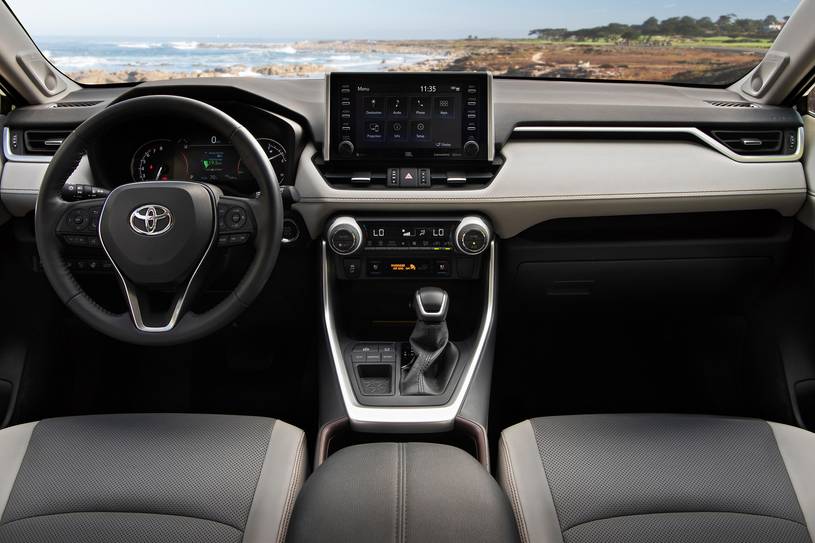
Posting a video demo probably isn't a great idea for this kind of thing. I'm sure some sicko could have figured this out just from the sound the locks make.
- Quoted phrase in the opening sentence
- Opening quote: “Any car”
- Quoted phrase in the opening sentence
- Opening quote: “sketchup”
You can set up a digital twin of your actual workshop, with config-driven models of table/band/miter/hand saws, router tables, drill press, chisels and rasps, all sorts of fun.
I recently added a jig system too, so you can build jigs that you can actually use, both in your shop and in the tool. It's all drivable by a human or an MCP, and has video and plan authoring and sharing built in.
I've been building this as a labor of love since getting laid off in April, it's all completely free to use and people have made some really damn cool plans with it.
From the article itself:
> Disclosure: I ported GPUI’s current Linux renderer to wgpu2, I built the benchmark harness used below, and I work on zgui, a signal-based Rust framework that appears in the charts.
https://github.com/zortax/zgui
zgui just released version 0.1.0 last month, with a 3 month dev history. And it's their only version.
https://github.com/zed-industries/zed/tree/main/crates/gpui
https://crates.io/crates/gpui/versions
GPUI's last release was 0.2.2, 1 year ago.
Framework maturity is an unavoidable contributing factor when choosing where to port over your application.
Should that mean that they can only choose 10-year-old frameworks? No, but also they shouldn't be chasing 1-month-old projects.
There are minimums & maximums, and the minimum sits at "definitely not 1 month old projects with only 1 public release".
- Ordinary term used more than once in the same comment
- “They're allowed to do it” appears 2 times
"They're allowed to do it" is one of those things that doesn't really bear saying so much because that's already been implicitly established. Nobody is claiming what they're doing is illegal, so how does this add anything of value? Who is still unaware that corporations will use their size and market control to their benefit?
The "SaaS is dead" narrative is a bit overblown, but private equity needs to think twice before gouging folks these days.
They do have this "usage based pricing" where you pay them for each user, but then also for each project and customer, and then a percentage of your billings. It's completely absurd to be paying them a percentage when you receive payments by wire and all they're doing is emailing an invoice.
Anyhow caveat emptor. Looking at their website they do not show the actual pricing. They just say it's "starting from" $9/seat or $14/seat, but you only pay that if you don't use the software at all.
As far as I can tell, what Bending Spoons has figured out is that they can raise prices 8-10x, but only maybe 60-80% of their customers will cancel because it's a big hassle, and so the profits go up massively for a while. They will probably even retain a hard core of say 10% of their original userbase for some time.
- Quoted phrase in the opening sentence
- Opening quote: “per seat”
It isn't about the money, the principle is gross. Thankfully Asana's core business is now a prompt. We are nearly done replacing it with a native, self hosted client. Will post about it once it is hardened through use. Cancelling our Asana subscription this week.
To SaaS providers (myself included) it has never been easier to leave your service due to mistreatment. Take note.
You can have those lower monthly fees if you pay a higher percentage of your billings.
The article acknowledged that.
> There’s also a “flex” plan which costs $12.65/mo… but that plan now skims an additional 2% on top of the usual ~3% card transaction fees.
The problems with the Harvest acquisition driving up prices has been discussed a lot among consultants and contractors. This isn’t one person reading their billing page wrong. This is happening to all of their customers.
It’s how the acquiring company operates: Acquire companies, increase billing, accept that most customers will leave but some will stay and make up for the losses.
"Between two operations nothing moves. Instead of sleeping until an animation finishes, the agent says clock +60000 or clock settle and reads the result. No timing flakes, no waits."